
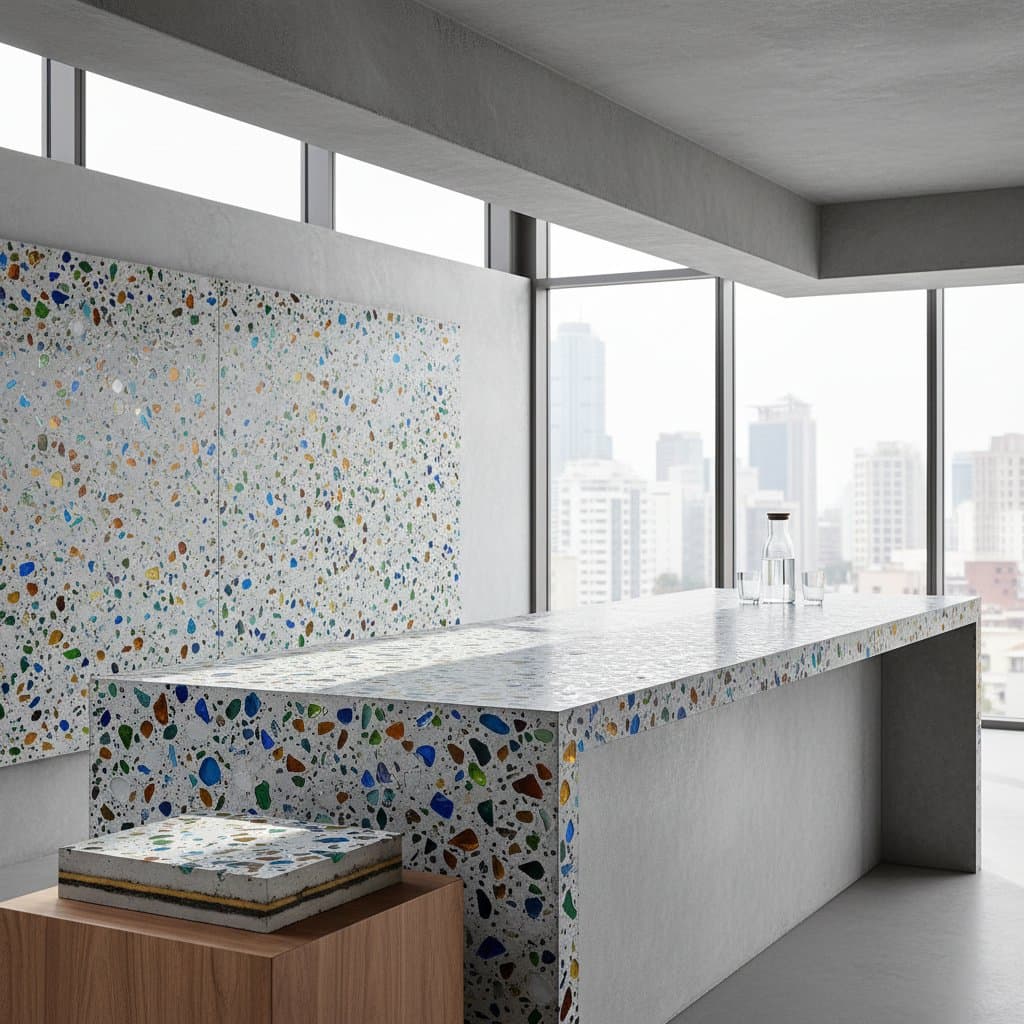
The Rise of Recycled Glass in 2026 Concrete Applications
Concrete forms the backbone of contemporary construction, yet its conventional production imposes significant environmental burdens. With sustainability at the forefront of architectural and building strategies, recycled glass emerges as a transformative element in concrete formulation and finishing. This evolution extends beyond visual enhancements to encompass improved material efficiency, waste diversion, and enduring robustness. Builders, designers, and property owners increasingly appreciate how recycled glass concrete integrates striking visuals, environmental stewardship, and structural reliability.
Essential Insights
- Pricing structure: Recycled glass concrete generally costs 10 to 25 percent more than conventional concrete, with expenses distributed as materials (60 percent), labor (30 percent), and equipment (10 percent).
- Aggregate dimensions: Glass fragments typically measure from 1/16 inch to 3/8 inch for ornamental surfaces, extending to 3/4 inch in load-bearing formulations.
- Curing duration: Initial curing requires 7 days, followed by polishing or sealing between 14 and 21 days.
- Ecological advantages: Substituting recycled glass for sand or gravel diminishes aggregate mining by as much as 40 percent.
- Critical considerations: Factors include color uniformity, exposure techniques, availability of local recycled sources, and integration with standard concrete recipes.
Preparing for a Recycled Glass Concrete Initiative
Assess your project's needs to determine if recycled glass serves decorative or structural purposes. Ornamental applications, like countertops or polished flooring, highlight hue and light reflection. Load-bearing options, such as foundation slabs or retaining walls, focus on functionality while incorporating recycled elements.
Regulatory and Standards Compliance
In most areas, authorities treat recycled glass concrete similarly to traditional varieties, though certain locales demand proof that the glass aggregate adheres to ASTM C33 or equivalent specifications. Verify that your supplier furnishes certification of compliance and that recycled content receives approval for the planned use.
Budgeting and Material Procurement
Procure recycled glass from nearby municipal programs or dedicated vendors. Expenses fluctuate based on hue options and preparation methods. Transparent and green glass prove more affordable, whereas bespoke mixtures featuring blue or amber variants elevate prices. Budget approximately 8 to 12 dollars per square foot for decorative work and 5 to 9 dollars per square foot for structural installations. Factor in transportation fees and potential premiums for processed, crushed glass to ensure accurate financial planning.
Detailed Implementation Guide
1. Formulating the Mix
Collaborate with a materials specialist or engineer to establish the optimal glass-to-aggregate proportion. Glass usually substitutes 10 to 30 percent of the aggregate volume. Exceeding this ratio risks heightened fragility, so balance with additional cementitious additives for stability.
2. Placement and Pouring
Execute the pour following standard concrete procedures. Minimize vibration to prevent glass particles from segregating. Opt for a low-slump consistency to preserve even distribution throughout the mix.
3. Initial Finishing and Curing
Level the surface with a magnesium or steel trowel for smoothness. Protect the pour with curing blankets or plastic sheets to sustain moisture levels during the initial 7 days. Consistent curing minimizes the risk of fissures and strengthens overall cohesion.
4. Polishing Process for Ornamental Finishes
Once cured, initiate grinding using 30- to 50-grit diamond pads to reveal the glass inclusions. Advance to progressively finer grits, reaching 800 or 1500 for a polished sheen. Introduce a densifier midway to reinforce the concrete matrix and amplify durability.
5. Application of Protective Sealants
Apply a penetrating or surface sealer to safeguard the finish. Penetrating types offer extended durability with subtle gloss, while surface sealers intensify color and reflectivity. Renew sealants every 2 to 3 years to maintain optimal protection.
Ensuring Quality Through Inspection
Recycled glass concrete must achieve equivalent compressive strength and hardness to standard mixes. Conduct slump evaluations and prepare cylinder samples for strength testing per applicable codes. Examine the surface for consistent aggregate visibility, uniform coloration, and even texture.
Mitigating Alkali-Silica Reaction
This reaction occurs when cement alkalis interact with silica in glass. Counter it by selecting low-alkali cement and adding pozzolans such as fly ash or silica fume, which neutralize alkalis and enhance mix stability.
Resolving Typical Issues
Inconsistent Coloration or Aggregate Reveal
Variations often arise from uneven polishing depths. Apply uniform pressure and inspect progress regularly to achieve balance.
Formation of Cracks
Such defects typically result from swift evaporation or excessive agitation. Maintain steady curing conditions and shield from direct sun exposure in the early phase.
Lackluster Appearance
A matte finish signals inadequate polishing or degraded sealant. Restore by refining with a high-grit pad and refreshing the protective layer.
Ongoing Maintenance Strategies
This material withstands regular use, yet diligent care sustains its aesthetics and integrity. Employ pH-neutral solutions for cleaning, steering clear of acidic or abrasive agents. Refresh sealants as needed, monitor expansion joints, and address minor damages swiftly.
For exterior settings, facilitate water runoff to avert freeze-thaw cycles. In cold areas, incorporate air-entraining agents for resilience against expansion. In moist climates, choose permeable sealers to allow vapor escape and avoid moisture buildup.
Routine Evaluation Points
- Cracks exceeding 1/16 inch in width
- Faded or matte surfaces
- Sealant breakdown or moisture penetration
- Color shifts or patches
- Foundation shifts or edge deterioration
Prompt intervention on these concerns averts extensive future expenses.
Deciding Between DIY and Expert Installation
Individuals with moderate concrete expertise may tackle modest decorative tasks, such as countertop fabrication or patio accents. Self-management can yield 20 to 35 percent savings on labor and materials. Nevertheless, mastering polishing and sealing demands practice, and flawed curing undermines structural viability.
Engage certified professionals for expansive slabs, critical structures, or intricate designs. Confirm their licensing, insurance coverage, and prior work with glass aggregates. Request demonstration samples or client testimonials to validate their proficiency.
Enduring Advantages of Recycled Glass Integration
Incorporating recycled glass advances ecological objectives alongside design versatility. It redirects landfill waste, curbs natural resource depletion, and aids in earning green building credentials. Finishes span from gentle iridescence to vibrant motifs, suiting diverse stylistic preferences.
In addition to sustainability, this concrete provides robust compression resistance, exceptional wear tolerance, and persistent elegance. The light-reflecting quality enhances illumination in interior spaces, promoting energy efficiency.
Advancing Your Project Forward
From kitchen renovations to driveway renewals or sustainable commercial developments, recycled glass concrete unites utility with environmental intent. Start by securing reliable supplies, verifying code adherence, and choosing finishes aligned with your aesthetic goals. This material embodies progressive building, where visual allure and planetary care forge resilient foundations.