
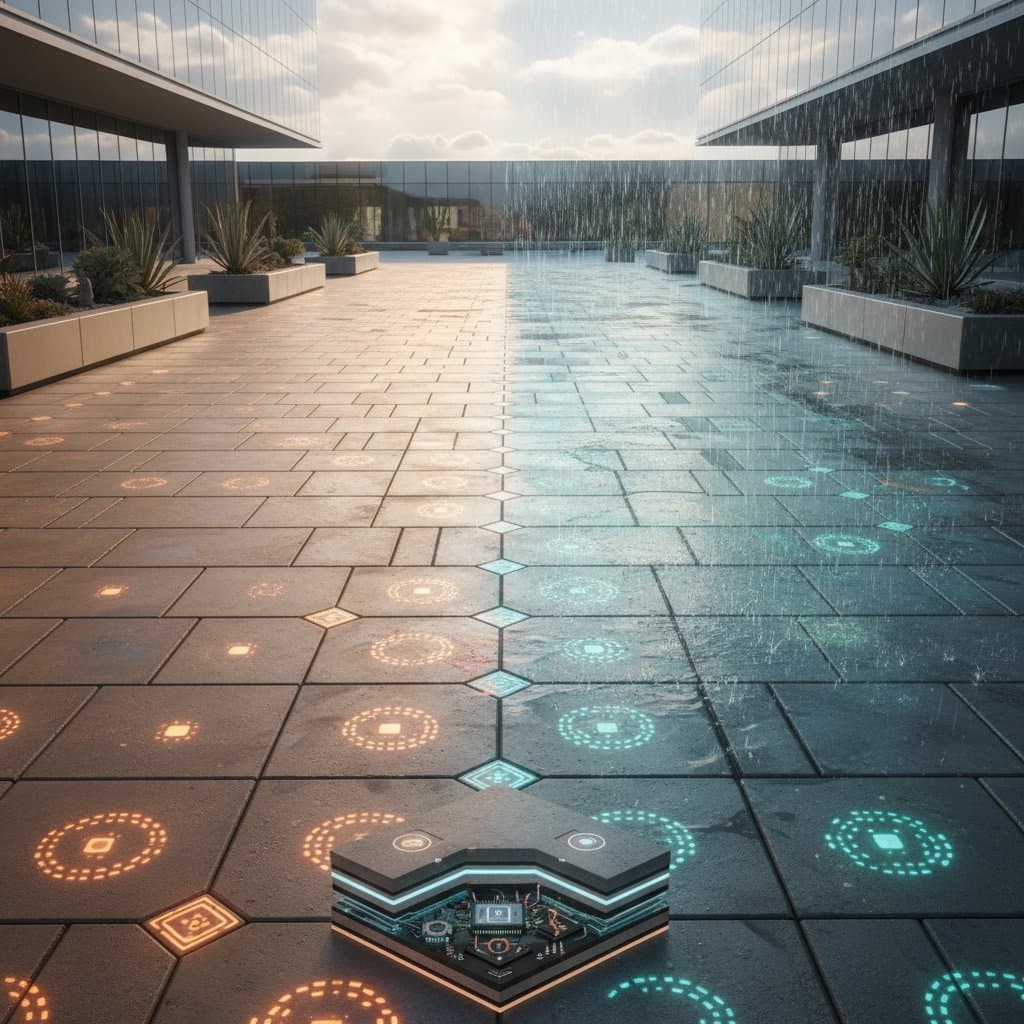
AI-Driven Pavers: Intelligent Masonry That Responds to Weather
AI-driven pavers mark a significant advancement in hardscaping, enabling masonry to interact dynamically with environmental factors. These systems incorporate embedded sensors and adaptive materials to monitor and adjust for temperature fluctuations, moisture levels, and structural loads on an ongoing basis. For homeowners, contractors, and landscape architects, this technology creates outdoor surfaces that withstand harsh conditions while enhancing overall performance through real-time environmental data.
Essential Insights
- Cost Breakdown: Installations of smart pavers generally cost between $18 and $35 per square foot, allocated as 60 percent to materials, 30 percent to labor, and 10 percent to equipment plus software setup.
- Sensor Responsiveness: Sensors capture and relay weather information every 5 to 10 seconds, enabling immediate modifications to surface properties like tension and thermal absorption.
- Core Materials: Systems typically feature porous ceramics, composite binders, and conductive mesh layers to support adaptive behaviors.
- Longevity Expectations: With correct installation, these pavers sustain optimal function for 25 to 40 years, needing only occasional recalibration.
- Selection Criteria: Local climate patterns, soil drainage capabilities, and energy sources such as solar panels or wired connections guide the ideal system setup.
Preparation and Design Essentials
Navigating Permits and Regulations
Prior to proceeding, review applicable building codes and environmental guidelines in your area. Certain regions treat AI pavers as electrically powered installations, necessitating permits for low-voltage cabling or digital connectivity. Verify compliance with permeable surface standards, particularly in areas designated for stormwater control.
Allocating Budget Effectively
Plan finances to cover initial setup alongside ongoing operational benefits. Although smart pavers demand a greater upfront investment than traditional options, they recoup costs through energy conservation and lowered maintenance needs, often within three to five years.
For a 100-square-foot area, consider this detailed cost outline:
- Materials: $1,200 to $2,000, covering pavers and adaptive components.
- Labor: $600 to $1,000, for skilled placement and integration.
- Sensors and Controllers: $300 to $600, including hardware for monitoring.
- Software Integration: $200 to $400, for programming and connectivity.
Conducting a Thorough Site Evaluation
Assess key site elements to inform the design process:
- Soil Composition: Dense soils like clay or silt demand enhanced sub-base drainage to prevent water buildup.
- Groundwater Levels: Elevated water tables can affect sensor accuracy, requiring protective measures.
- Solar Access: Ample sunlight supports solar-powered units, reducing reliance on external electricity.
- Freeze Line Depth: This factor influences the depth of insulation and foundational layers to combat frost heave.
Detailed Installation Guide
-
Prepare the Base Layer
Distribute crushed stone uniformly and compact it in layers to achieve stability and avoid future shifts. Ensure even thickness throughout the designated area. -
Position Conduits and Sensors
Route conduits according to the planned layout and place sensors at 3- to 5-foot intervals. Double-check positioning against the system's technical drawings. -
Spread Bedding Sand
Level the sand to a precise 1-inch depth using a screed board. Compact lightly to preserve workability during paver placement. -
Lay the Pavers
Start at a designated corner and proceed systematically across the surface. Employ spacers to secure 1/8-inch joints for uniform spacing. -
Connect Sensor Components
Link each paver's integrated node to the central controller, adhering strictly to the manufacturer's wiring instructions. -
Fill Joints
Introduce polymeric sand into the gaps and apply a gentle water mist to initiate the binding process. -
Calibrate the System
Activate the control unit and execute initial tests. Validate readings for temperature, humidity, and load distribution to confirm full functionality.
Resolving Typical Challenges
Addressing Inconsistent Adjustments
When specific pavers do not respond uniformly, inspect for compromised sensors or displaced conduits. Isolate and replace only the problematic elements to preserve system integrity.
Fixing Communication Disruptions
Nearby metallic objects may cause signal interference in wireless setups. Mitigate this by adding signal repeaters or opting for hardwired connections to ensure steady data flow.
Preventing Water Accumulation
Excess water often stems from inadequate base compaction or blocked drainage paths. Examine underlying layers and remove any obstructions from sensor enclosures.
Choosing Between DIY and Expert Installation
Opt for certified professionals on expansive residential projects, commercial sites, or setups involving supplemental features like embedded heating. Experts guarantee adherence to regulations, precise system tuning, and sustained performance over time.
Enhancing Outdoor Durability Through Adaptive Technology
AI pavers transition hardscaping from static elements to dynamic features that harmonize with natural conditions. Mastering their operational principles and installation techniques allows you to develop resilient outdoor environments that demand less intervention and deliver consistent, intelligent functionality across seasons.