
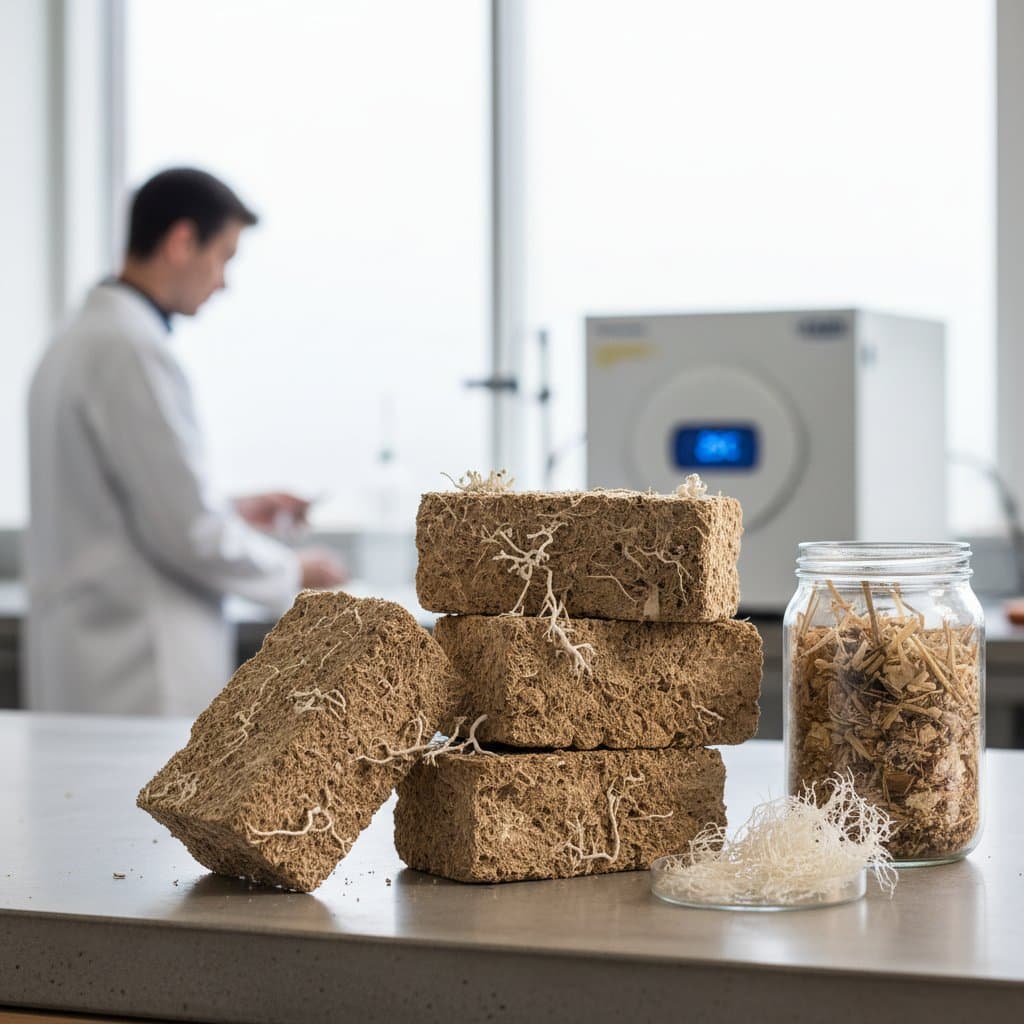
Understanding Mycelium Bricks
Mycelium bricks represent an innovative bio-based material grown from the root-like networks of fungi, rather than shaped and fired from clay. These living fungus bricks form part of a broader push toward sustainable masonry options that minimize carbon emissions and leverage renewable resources. The mycelium binds organic waste, such as sawdust or agricultural husks, into a lightweight yet solid form. After growth in custom molds, the bricks dry to halt further development, yielding compostable blocks ideal for non-load-bearing walls, insulation panels, and decorative elements.
Traditional clay bricks demand high-energy kilns and draw from finite clay deposits, contributing significantly to global emissions. In contrast, mycelium bricks develop at ambient room temperatures with negligible energy input. Sourcing feedstock from farm byproducts that might otherwise decompose ensures a carbon-negative outcome. Builders must recognize the material's structural constraints and target applications to maximize its potential.
Skill level: Intermediate. Participants need basic familiarity with mixing and handling organic materials.
Physical demand: Light to moderate. Tasks involve preparing molds and substrates, suitable for solo efforts with occasional assistance.
Helper recommended: One person aids in blending large batches and relocating filled molds.
Aligning Mycelium with Sustainable Construction
Mycelium bricks advance regenerative building by transforming waste into durable components. The fungal process sequesters carbon within the structure during growth. Sealed and protected bricks maintain integrity over extended periods. At the end of their service life, they biodegrade harmlessly into soil, leaving no harmful residues.
Designers value these bricks for superior thermal insulation and acoustic damping properties. Treated versions exhibit natural fire resistance and deter common pests more effectively than raw wood. Compressive strength falls short of conventional masonry, limiting use to interior partitions, accent walls, sound barriers, and non-structural infill. Load-bearing or weather-exposed applications necessitate consultation with structural engineers, often incorporating mycelium alongside reinforcing elements like timber frames.
Deciding Between DIY and Professional Implementation
Home builders can successfully produce mycelium bricks for decorative or partition purposes without advanced expertise. Professional oversight becomes essential for structural integrations, such as perimeter walls, basements, or rain-exposed exteriors. These scenarios demand rigorous engineering assessments, moisture barriers, and adherence to local building codes. Novices should confine experiments to indoor, non-critical installations to build confidence safely.
Project Planning Essentials
Effective planning sets the foundation for successful mycelium brick production. Account for growth timelines, which require several days of incubation, offset by straightforward preparation steps.
Site Evaluation
Select an indoor workspace with consistent temperatures between 70 and 80 degrees Fahrenheit for optimal fungal activity. Opt for easily cleaned surfaces to manage spills of substrate. Ensure adequate ventilation to circulate air without exposing the setup to drafts or intense light. Implement drip trays or absorbent mats to handle excess moisture and maintain dryness post-curing.
Dimensioning and Quantity Calculation
Standard DIY bricks measure approximately 8 inches long, 4 inches wide, and 3 inches thick, mimicking traditional modular sizes for easy integration. Survey the intended installation area, such as a room divider or garden feature, and compute required volume. Factor in a 10 percent surplus to accommodate defects, cuts, or practice runs.
Growth Environment Considerations
Stable humidity around 70 percent fosters rapid mycelium spread, while temperatures above 85 degrees risk fungal die-off. Sterile conditions prevent rival microbes from competing with the desired culture. Monitor daily to adjust as needed, ensuring uniform colonization across all bricks.
Anticipated Challenges
Contamination from airborne spores poses the primary risk; mitigate by working in isolated areas and using protective gear. Uneven substrate packing leads to weak spots, so compact materials thoroughly. Extended drying in damp climates may extend timelines, but proper technique yields reliable results.
Substrate Selection Options
Choosing the right base material influences growth rate, strength, and final texture. Each option draws from abundant waste streams, enhancing the project's eco-credentials.
Sawdust-Based Substrate
This variant uses finely milled wood residues blended with mycelium spawn for a dense matrix.
- Advantages: Abundant supply from lumber mills, results in cohesive and lightweight bricks.
- Drawbacks: Demands thorough sterilization to eliminate competing organisms; colonization proceeds gradually over 7 to 10 days.
- Cost: Inexpensive, often under $0.50 per pound.
- Skill level: Accessible for novices with basic mixing skills.
- Ideal applications: Indoor decorative panels or shelving inserts.
Agricultural Husk Substrate
Husks from rice, wheat, or corn provide a fibrous base that promotes airflow during growth.
- Advantages: Accelerates binding in 5 to 7 days, yielding breathable structures.
- Drawbacks: Fragile if under-compressed, requiring firm packing techniques.
- Cost: Economical, sourced from local farms at minimal expense.
- Skill level: Moderate, involving precise moisture balance.
- Ideal applications: Sound-absorbing partitions or ventilation screens.
Paper and Cardboard Substrate
Shredded recycled paper or cardboard fibers serve as a simple, urban-sourced medium.
- Advantages: Utilizes everyday waste, molds flexibly for custom shapes.
- Drawbacks: Yields softer bricks needing protective coatings for longevity.
- Cost: Negligible, repurposing household discards.
- Skill level: Beginner, with shredding as the main prep step.
- Ideal applications: Artistic installations or temporary exhibits.
Essential Tools and Supplies
Assemble a compact toolkit to streamline the process from mixing to installation.
Manual Implements
- Large plastic buckets facilitate uniform blending of substrate and spawn.
- Sturdy trowels smooth fills and remove excess material from molds.
- A flexible measuring tape ensures accurate sizing for consistent bricks.
- Metal scrapers gently release cured blocks without surface damage.
Powered Aids
- An electric drill fitted with a paddle attachment homogenizes batches quickly.
- A low-speed fan regulates drying humidity without disturbing bricks.
- A heat gun, used sparingly, accelerates surface evaporation in cooler setups.
Specialized or Rented Gear
For uniform results, rent a food dehydrator or low-temperature oven to reduce moisture content evenly. If unavailable, improvise with a sunlit room featuring cross-breezes, monitoring progress hourly.
Comprehensive Materials Inventory
- 1-2 pounds of mycelium spawn per cubic foot of substrate.
- Pre-sterilized base material, scaled to project volume.
- Reusable molds in desired dimensions, crafted from non-porous materials.
- Nitrile gloves, N95 masks, and alcohol-based sanitizers for hygiene.
- Breathable sealants like linseed oil or beeswax for post-production protection.
- Allocate a 10 percent excess across all consumables to offset losses.
Detailed Fabrication Process
Follow these steps methodically to produce high-quality mycelium bricks.
-
Mold Preparation: Sterilize all surfaces with a 70 percent isopropyl solution and allow to air dry. Brush on a thin layer of non-toxic release agent, such as olive oil, to ease demolding.
-
Substrate and Spawn Integration: In a clean container, fold the spawn into the dampened substrate using a gloved hand or paddle until threads distribute evenly, resembling a uniform compost.
-
Mold Filling: Pack the mixture into forms with moderate pressure, tapping sides to expel air voids. Smooth tops with a trowel for even curing.
-
Incubation Phase: Drape molds with cheesecloth or perforated plastic to permit gas exchange. Position in a shaded spot at 75 degrees Fahrenheit for 5 to 10 days, checking for full white coverage.
-
Demolding: Gently flex molds to extract bricks, examining for solid, mycelium-veined interiors. Trim irregularities with a sharp knife if needed.
-
Drying Protocol: Arrange bricks on wire racks in a 100-degree environment until they weigh 20 percent less, typically 2 to 4 days. This step solidifies the structure.
-
Surface Treatment: Buff on sealant in light coats, allowing 24 hours between applications to build moisture resistance.
-
Assembly: Secure bricks with low-VOC mortar or mechanical fasteners, aligning for plumb installation.
Verification Steps:
- Confirm mycelium blankets the entire block pre-drying.
- Test dryness by snapping a small piece; it should fracture crisply.
- Isolate and compost any bricks showing green or black spots.
Expert Recommendations
Purchase spawn from reputable mycology suppliers to ensure viability. Test a small batch with your chosen substrate to refine ratios before scaling up. In high-humidity zones, incorporate silica packs during storage to extend shelf life.
Extending the Impact of Your Mycelium Project
Mycelium bricks not only reduce reliance on industrial materials but also inspire ongoing innovation in green construction. Integrate them into hybrid designs for enhanced performance, such as combining with recycled aggregates for added strength. Document your build to share insights, fostering a community of sustainable creators. This approach yields structures that actively contribute to environmental health while delivering aesthetic and functional value.