
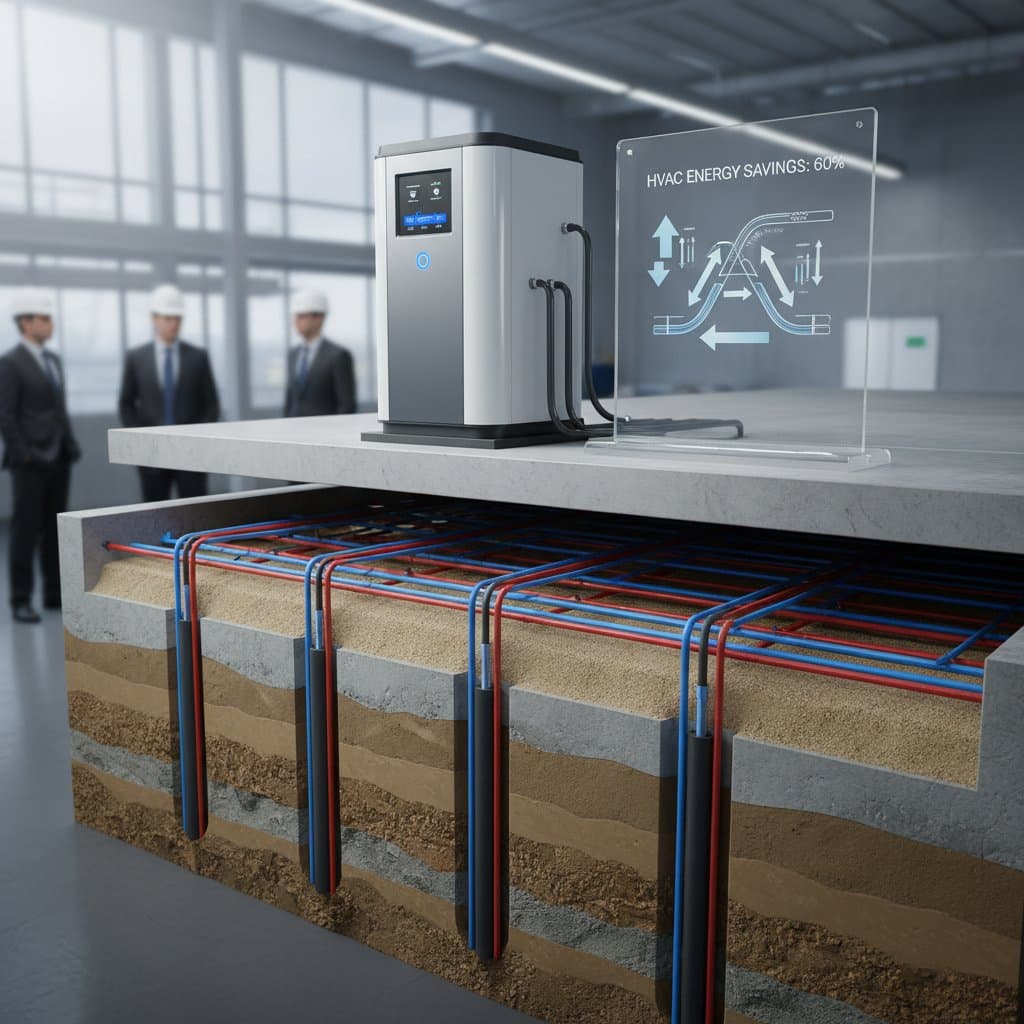
Reduce HVAC Costs by Up to 60% with Geothermal Foundations
When building or renovating a home, decisions about heating and cooling systems shape future comfort, efficiency, and expenses. Geothermal foundations provide one of the most reliable methods to lower these costs. These systems utilize the earth's consistent underground temperature to manage indoor climate, potentially reducing HVAC energy consumption by up to 60 percent. The following sections detail how these foundations function, their expenses, planning and installation processes, and maintenance needs for sustained performance over decades.
Key Takeaways
- Energy Savings: Systems deliver up to a 60 percent decrease in HVAC operating costs, as heating and cooling typically represent 25 to 35 percent of total household energy use.
- Installation Expenses: Expect costs between $25,000 and $45,000, with approximately 70 percent allocated to materials and drilling, 20 percent to labor, and 10 percent to controls and finishing.
- Loop Depths: Vertical configurations extend 150 to 300 feet, whereas horizontal setups span 250 to 500 feet per ton of capacity.
- Timeline: Complete integration generally takes 3 to 4 weeks, influenced by soil conditions and equipment availability.
- Selection Criteria: Factors such as soil composition, property size, regional climate, and heating demands guide the optimal loop design and return-on-investment timeline.
Essential Planning Steps
Thorough preparation before any digging or drilling promotes efficiency, regulatory adherence, and safety.
Permits and Regulations
Local authorities usually mandate mechanical and environmental permits for geothermal installations. These requirements align with building codes, protect groundwater, and enforce distance rules from structures or water sources. Confirm that any contractor possesses geothermal-specific certification and carries adequate liability insurance to safeguard your project.
Site Assessment and Soil Analysis
Conduct a thermal conductivity test to evaluate how well the soil conducts heat. Sandy or arid soils often require extended loops for effective performance, while clay-rich or wet soils transfer heat more readily. Engage a geoengineer or HVAC specialist to simulate system output based on these findings, ensuring a customized design.
Financial Considerations and Return Timeline
Initial outlays surpass those for conventional furnaces and air conditioners, yet the savings over time prove compelling. Many owners recoup their investment in 6 to 10 years, varying with local utility rates. Government incentives at federal and state levels can offset 20 to 30 percent of upfront costs, strengthening the economic viability.
Detailed Installation Process
1. System Design and Configuration
Collaborate with a geothermal engineer to calculate the loop field size according to your home's heating and cooling requirements. Specify the pipe length needed per ton of capacity and choose between vertical or horizontal layouts based on site constraints.
2. Excavation and Piping Placement
- Horizontal systems involve trenches at minimum depths of 4 feet and widths of 2 feet to accommodate piping.
- Vertical systems require boreholes drilled 15 to 20 feet apart for optimal heat exchange.
- Position loop pipes with care to avoid kinks or pressure damage during insertion.
- Perform pressure tests on all joints to detect and resolve potential leaks early.
3. Backfilling and Securing the Loops
Refill trenches or boreholes using native soil or specialized thermal grout to maximize pipe-to-ground contact. Layer and compact the material progressively to minimize future shifting or voids.
4. Integration with Foundation and Heat Pump
Route insulated supply and return lines through a watertight sleeve in the foundation wall to the mechanical area. Link these to the indoor heat pump unit, then add the circulation pump, flow center, and distribution manifold for seamless operation.
5. Testing and Final Activation
After sealing and filling the system, purge any trapped air from the loops and confirm proper flow rates and pressures. Operate the heat pump in both heating and cooling modes to validate functionality, then calibrate controls for precise performance.
Addressing Common Challenges
Geothermal systems prove robust, but occasional issues arise. Proactive steps keep operations smooth.
- Reduced Flow or Pressure: Air entrapment, pipe bends, or pump failures often cause this; inspect and bleed lines as needed.
- Inconsistent Heating: Imbalances in the manifold or air within loops may contribute; adjust valves and flush accordingly.
- Operational Noise: Cavitation from low fluid levels or unsecured components can occur; tighten fittings and check pump settings.
- Frequent Compressor Cycles: Misadjusted thermostats or refrigerant shortages typically trigger this; recalibrate and recharge under professional guidance.
Regular checks avert escalation into major problems.
DIY Installation Versus Professional Expertise
While some homeowners consider partial DIY efforts for simpler aspects like site preparation, full geothermal installation demands professional involvement. The process includes specialized drilling, precise piping, and electrical integrations that require certified skills to meet codes and warranties. Attempting DIY risks structural damage, system inefficiencies, or voided incentives. Hiring accredited installers ensures reliability, often with performance guarantees lasting 25 years or more. Budget for their expertise as an investment in durability and peak efficiency.
Maintenance Strategies for Enduring Performance
Properly installed geothermal foundations endure 50 years or longer with basic care. Underground pipes resist wear absent physical disruption, and indoor heat pumps operate effectively for 20 to 25 years.
Ongoing Upkeep Routine
- Monitor fluid levels and system pressure every 6 months to detect early anomalies.
- Clean or replace air filters on a quarterly basis to maintain airflow.
- Flush the loop circuit and assess antifreeze strength biennially for corrosion prevention.
- Calibrate thermostats and controls once a year to optimize energy use.
- Inspect entry-point insulation annually for signs of wear or water intrusion.
Diligent maintenance preserves high efficiency and consistent comfort across the home's lifespan.
Realize Sustainable Savings Through Geothermal Integration
Adopting geothermal foundations positions your home at the forefront of energy innovation. Beyond the immediate 60 percent HVAC cost reduction, these systems enhance environmental responsibility by minimizing fossil fuel reliance. Consult local experts early in your build or remodel to tailor this technology to your needs. The result delivers not only financial relief but also a resilient, comfortable living space for generations.