
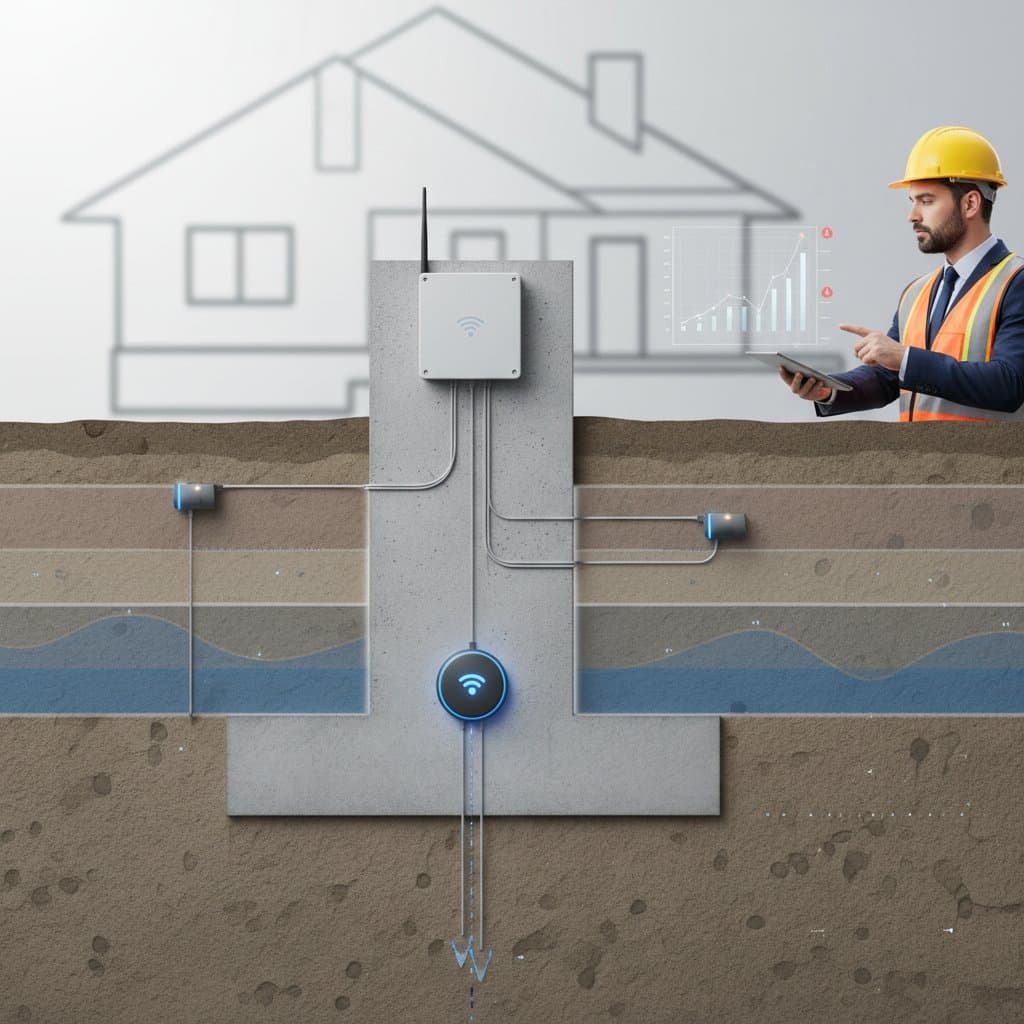
The IoT Sensors Preventing Costly Foundation Settling
Foundation settling occurs when the soil beneath a building shifts or compresses unevenly. This process leads to cracks, door misalignment, and structural stress. The issue often develops quietly over years before clear signs appear. By that point, repairs may cost thousands of dollars. Smart monitoring through Internet of Things (IoT) sensors now enables homeowners and facility managers to detect early movement and avoid major damage.
These sensors monitor soil moisture, vibration, tilt, and pressure changes under and around a foundation. They transmit data to a cloud dashboard, where patterns indicate potential structural shifts. This real-time information prevents expensive repairs and prolongs a building's lifespan.
How IoT Foundation Sensors Work
IoT foundation sensors consist of small wireless devices positioned at critical points under or around a house. They measure physical conditions that affect soil and structural stability. The primary types include the following:
- Moisture sensors monitor variations in soil water content. Excess or insufficient moisture causes swelling or shrinkage in clay soils.
- Tilt sensors identify minute changes in angle or level, indicating whether foundation sections rise or sink.
- Vibration and strain gauges assess movement or stress in concrete or support beams.
- Temperature and humidity sensors account for seasonal influences, such as frost heave or drying cycles.
Each sensor relays data via a hub or gateway to a secure online platform. The system applies analytics to identify abnormal trends and notify the homeowner before visible problems emerge.
Cost Overview
Basic soil and tilt sensors begin at $80 to $150 per unit. Complete systems, including gateways, cloud access, and professional installation, range from $1,500 to $4,000 for an average home. Larger residential or commercial properties may require $10,000 or more, based on coverage and analytics capabilities.
Cost Drivers
- Number of sensors and the area they cover.
- Sensor precision and data transmission frequency.
- Choice between wired and wireless communication.
- Accessibility for installation and local soil conditions.
- Duration of the monitoring plan and data storage period.
Foundation repairs often exceed tens of thousands of dollars. Therefore, smart monitoring represents a valuable preventive measure.
Specifications to Verify Before Purchase
Compare systems by examining these key specifications:
- Sensor accuracy: Select tilt sensors with readings within 0.1 degrees and moisture sensors within 2 percent.
- Data frequency: Choose adjustable intervals, from every few minutes to hourly updates.
- Communication range: Ensure at least 100 feet indoors, or greater for buried sensors.
- Ingress Protection (IP) rating: Opt for IP67 or higher to resist moisture.
- Operating temperature range: Confirm suitability for the local climate.
- Cloud compatibility: Verify secure data storage and mobile alert features.
Request technical documentation to validate adherence to building monitoring standards.
Installation Process
Follow these steps for effective installation:
- Plan the layout. Identify and mark sensor locations at corners, midpoints, and vulnerable areas.
- Excavate small holes. Adjust depth according to sensor type, usually 6 to 18 inches.
- Position sensors and backfill. Ensure level placement and correct orientation.
- Connect to the hub or gateway. Test signal strength and perform calibration.
- Launch the monitoring software. Establish alert thresholds.
- Validate data transmission. Review initial readings prior to completing the setup.
A residential installation typically requires one day.
DIY Installation or Professional Assistance
Homeowners can install basic wireless moisture sensors independently with a handheld drill and shallow trenches. Precision in placement and calibration proves essential. Engage a professional for setups involving structural integration, deep soil sensors, or complex data analysis. Engineers or foundation experts integrate sensor data with soil assessments and recommend solutions like drainage improvements or stabilization techniques.
Regional and Climate Considerations
Adapt monitoring to local conditions:
- Cold climates: Freeze-thaw cycles cause soil expansion and contraction. Select sensors rated for subzero temperatures and monitor for rapid moisture increases during thawing.
- Arid zones: Prolonged dry periods contract clay soils. Measure deep moisture levels to anticipate settlement affecting the foundation slab.
- Coastal or humid regions: Elevated groundwater demands sealed sensors and corrosion-resistant materials.
- Areas with salt exposure: Employ stainless steel or coated components near roadsides or coastlines to prevent corrosion.
Customize alert thresholds to accommodate typical seasonal fluctuations in the region.
Alternatives and Complementary Approaches
Traditional methods, such as visual inspections and periodic geotechnical surveys, offer basic oversight but lack real-time precision. Leveling surveys with manual tools detect shifts after they occur, often requiring excavation for confirmation. Complementary practices include installing French drains to manage water flow or using piering systems for immediate stabilization. Combine IoT sensors with these techniques for comprehensive protection, as sensors provide ongoing data to inform proactive interventions.
Strategies for Optimal Performance
Establish a baseline reading immediately after installation to serve as the reference for ongoing comparisons. Examine data on a monthly basis, regardless of alerts, to identify gradual trends over isolated measurements. Manage vegetation and irrigation around the foundation to prevent excess water from influencing sensor accuracy and soil conditions. Perform firmware updates and annual recalibration to sustain precision. Provide reports to structural engineers or insurance providers to demonstrate diligent property maintenance.
Sustaining Foundation Monitoring
IoT foundation monitoring delivers reassurance through reliable data that safeguards property integrity. A secure foundation supports stable walls, functional doors, and enhanced market value. Early detection of soil movements averts progression to noticeable cracks, thereby conserving resources and reducing anxiety. Integrate this system into routine home upkeep for enduring benefits.