
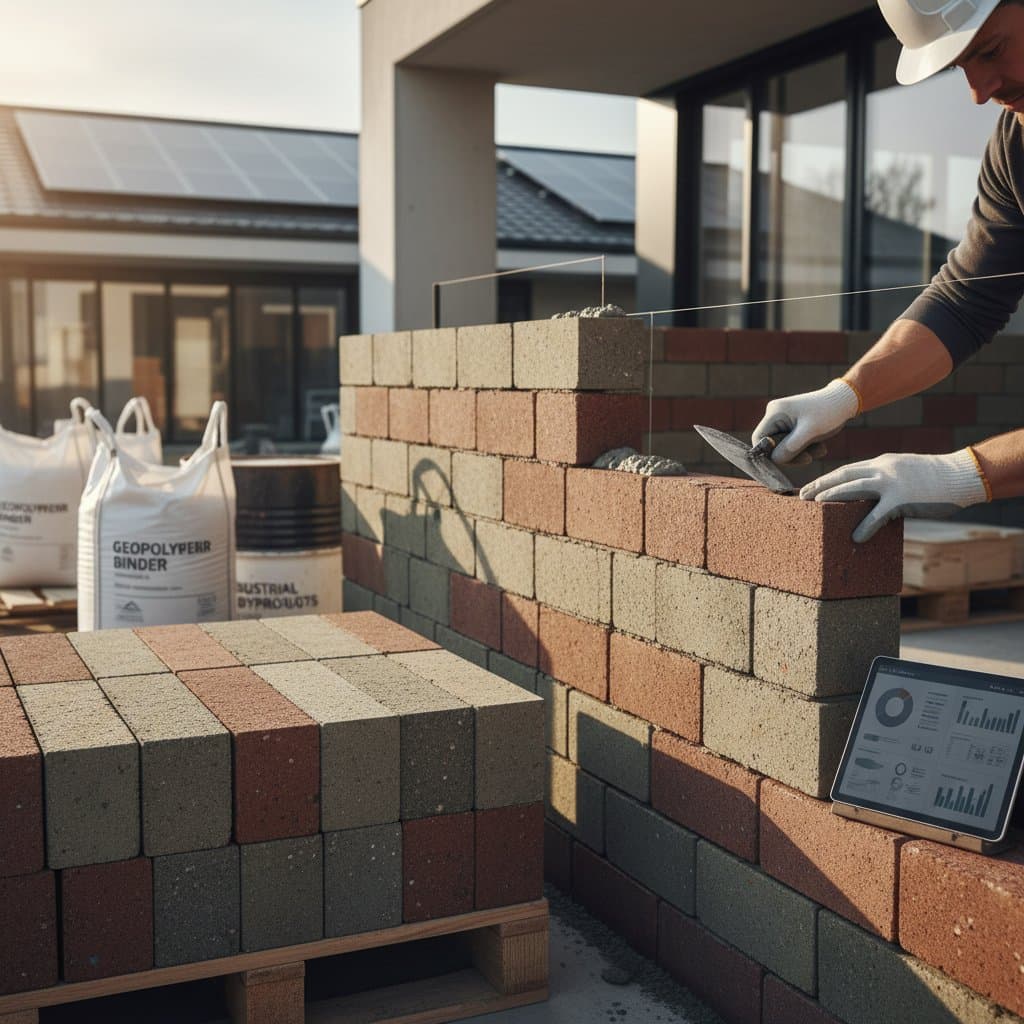
Geopolymer Bricks: Cement-Free Masonry Enters the Mainstream
Key Insights
Geopolymer bricks eliminate cement from the masonry process. This shift influences costs, environmental impact, and long-term performance. Primary concerns include variable quality from smaller manufacturers and limited performance data in humid or freezing climates. Factors affecting expenses involve sourcing raw materials, managing curing processes, and handling transportation.
Essential Quality Checks
Perform these straightforward field inspections prior to purchase or specification.
- Surface appearance: Ensure consistent color and density throughout batches.
- Sound evaluation: Strike two bricks together; a clear, resonant tone indicates quality, while a muffled sound suggests defects.
- Water absorption test: Apply water to the surface; gradual absorption points to effective curing.
- Edge strength: Apply gentle pressure to corners; they should remain firm without flaking.
- Storage practices: Verify that bricks are stacked dry and sheltered, avoiding exposure to rain or ground moisture.
Homeowners can complete these assessments quickly. Such evaluations confirm appropriate curing and storage, which often determine success more than initial design choices.
Warning Signs
- Visible cracks or powdery surfaces prior to installation.
- Early efflorescence on cured bricks.
- Significant differences in density across pallets.
- Absence of data on compressive strength or water absorption.
- Supplier reluctance to disclose binder composition or material origins.
- Assertions of no maintenance required without supporting documentation.
These indicators point to potential issues like rapid deterioration or separation during wet-dry cycles.
Potential Solutions and Estimated Costs
For early issues, applying a surface sealant or lime wash may mitigate damage, though it addresses symptoms rather than root causes from inadequate curing. Full removal and reconstruction typically costs 20 to 40 dollars per square foot. Well-produced geopolymer bricks price similarly to standard fired clay bricks, at one to two dollars per unit, with regional shipping adding 10 to 15 percent to the total.
Mortar joint repairs demand a matching binder, distinct from Portland cement types. Incompatible mortars lead to fractures or surface spalling. Replacing flawed batches provides the most reliable resolution. Construct and observe a test wall for one season before committing to load-bearing applications.
Deciding Between Repair and Replacement
For Existing Brick Structures: When the framework remains stable and damage is superficial, cleaning followed by repointing with suitable mortar proves more economical than complete replacement. Opt for replacement only if bricks exhibit reduced strength or if walls display bowing from extensive water infiltration.
For New Construction: Select geopolymer bricks in areas with accessible fly ash or slag supplies, provided teams can oversee curing. Steer clear of sites prone to persistent moisture or inadequate drainage until local performance is established.
Mortar Matching: Align binder types precisely. Standard cement mortars retain water against geopolymer surfaces, promoting flaking. Rely on manufacturer-validated joint materials.
Assembling the Right Team and Workflow
Engage a materials engineer or seasoned mason at the outset. They conduct tests for strength and absorption rates. Architects verify compliance with building codes and refine structural plans. General contractors identify potential delays from curing or procurement.
Coordinating supplier and installer reviews concurrently streamlines efforts and aligns expectations. Expert involvement increases project expenses by 10 to 20 percent on intricate builds, yet it averts substantial future corrections. Arrange delivery to keep pallets dry and elevated from soil.
Prioritizing Project Elements
Focus on high-impact actions initially.
- Assess and improve site drainage and grading before masonry begins.
- Apply geopolymer bricks to load-bearing walls rather than non-structural facings.
- Integrate insulation and weatherproofing concurrently to prevent thermal bridges.
- Defer ornamental reconstructions or surface applications until on-site endurance is confirmed.
Retain original fired brick features when feasible. Combining materials at different levels enhances aesthetics and distributes potential risks.
Planning Budget and Installation Sequence
Execution order outweighs material selection in determining outcomes.
- Validate water diversion systems and base drainage.
- Secure the building frame and supports.
- Inspect load-bearing walls for integration with replacement units.
- Build test panels and track moisture behavior.
- Advance to complete walls once tests satisfy requirements.
- Apply protective finishes or permeable sealants as needed for local weather.
Hastening full-scale work without preliminary trials risks doubling expenses upon discovering latent flaws.
Ensuring Long-Term Performance
Geopolymer masonry requires routine upkeep post-construction. Maintain clear gutters and extend downspouts fully. Annually examine joints for fissures or salt deposits. Clean surfaces using a gentle soap solution and water, avoiding acidic cleaners. Monitor for discoloration, which may indicate hidden water movement.
In dry conditions, these bricks surpass conventional clay in load-bearing capacity and resistance to chemicals. Their lack of cement lowers production emissions and repurposes industrial waste. As one experienced mason from Ontario observed, “These bricks live or die by curing control and moisture management.” That principle holds for all masonry. Property owners who prioritize drainage, conduct small-scale trials, and review quality documentation secure the advantages of innovative materials without undue risks. Diligent monitoring and methodical planning yield enduring, sustainable results.