
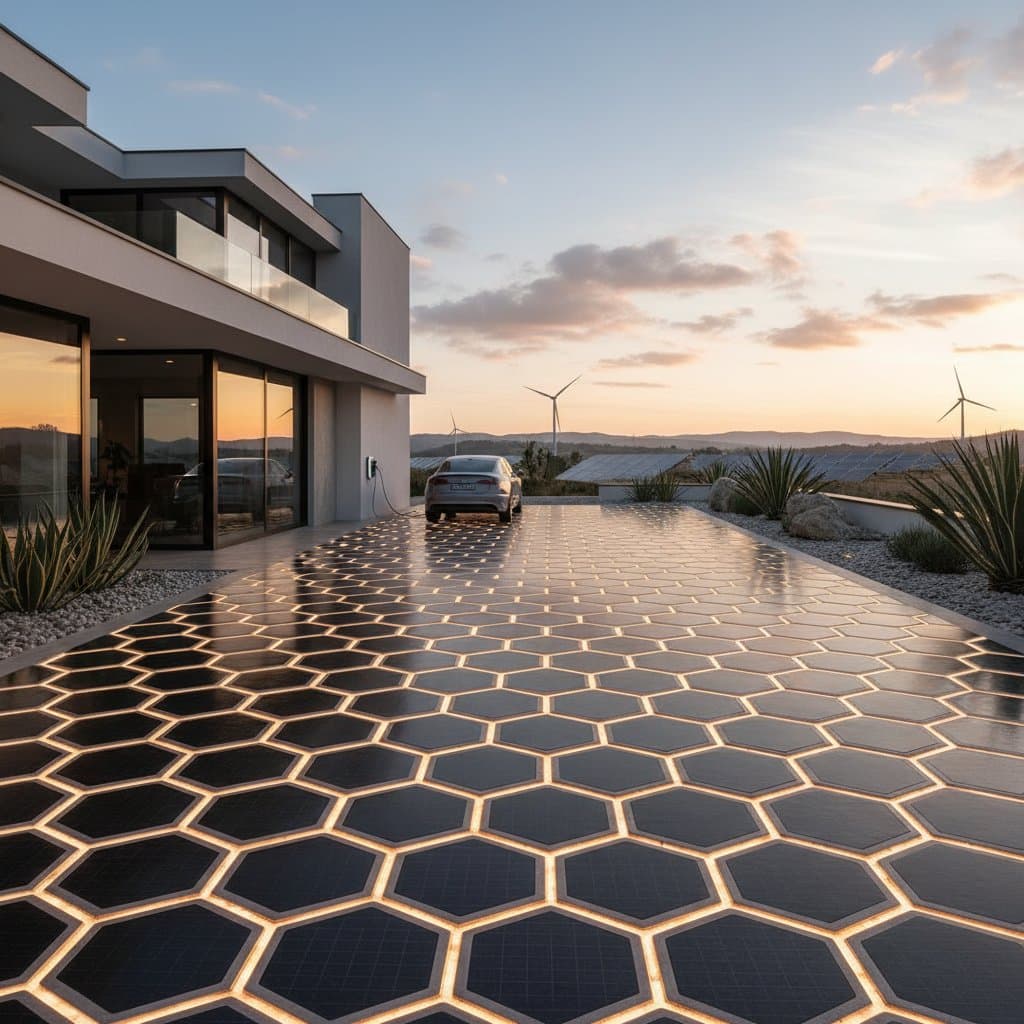
Planning Requirements and Feasibility Assessment
Before purchasing materials for solar pavers, evaluate your property conditions thoroughly. This assessment prevents costly mistakes and ensures adherence to local regulations.
Site Evaluation
Assess sunlight exposure first. Select areas that receive at least six hours of direct sunlight each day. Steer clear of shaded spots caused by trees or nearby buildings.
Examine slope and drainage next. Aim for a surface with a one to two percent slope to facilitate water runoff. Accumulated water can impair electrical efficiency and harm connectors.
Check soil stability. Use compacted subgrades or stabilized gravel bases to avoid settlement that might stress wiring.
In regions with cold weather, consider frost depth. Extend the base below the local frost line to guard against heaving.
Permits and Codes
Solar paver projects involve both electrical and structural rules. Secure the following permits as needed:
- Electrical permit for grid ties and inverter setup.
- Building permit if the work alters grade, foundation, or drainage.
- Inspection prior to system activation to confirm safety standards.
Contact your local authority for specific requirements. Neglecting permits may lead to penalties or project dismantling.
Cost Considerations
Expect to invest between $8,000 and $14,000 for a standard residential solar driveway, based on size and complexity. Breakdown includes:
- Materials at 50 percent, covering solar pavers, wiring, connectors, and inverter.
- Labor at 40 percent, encompassing excavation, base work, installation, and electrical tasks.
- Equipment and permits at 10 percent, such as compactors, tools, and fees.
By contrast, traditional concrete driveways cost $6 to $12 per square foot. Solar pavers command a 60 to 100 percent premium, balanced by future energy savings.
Key decision factors include sunlight availability, budget constraints, grid connection options, and local codes. These elements dictate overall system suitability.
Step-by-Step Installation Process
Installation typically spans three to five days, including preparation, placement, and electrical testing.
1. Excavate and Grade the Site
Clear existing surfaces to a depth of eight to ten inches. Create a consistent slope of one inch per eight feet for effective drainage. Compact the subgrade with a plate compactor to reach 95 percent density.
2. Install the Aggregate Base
Apply crushed stone in four-inch layers, compacting each one thoroughly. Use a laser level or string line to confirm evenness and slope. This foundation resists deformation and safeguards electrical conduits.
3. Place Electrical Conduits and Junction Boxes
Lay conduits per the wiring diagram, spacing them 24 to 36 inches apart based on paver arrangement. Direct routes to the inverter along protected paths. Position junction boxes at key access points for ongoing maintenance.
4. Set Bedding Sand Layer
Distribute one inch of coarse sand across the base. Level it evenly with a screed, then refrain from stepping on it. The sand provides cushioning and enables fine adjustments during paver placement.
5. Lay Solar Pavers and Connect Wiring
Arrange pavers in the desired pattern, linking electrical terminals progressively. Keep joints at one-eighth inch for uniformity. Employ manufacturer connectors for secure, watertight bonds. Test voltage in sections to verify connections.
6. Install Edge Restraints and Compact the Surface
After placing all pavers, affix perimeter restraints using concrete or spikes. Compact gently with a rubber-plate tool to lock pavers in place. Prevent excessive vibration that might harm solar cells.
7. Complete Electrical Integration
Link the array to the inverter and service panel. Ground the system with copper rods inserted eight feet deep. Label all circuits for easy identification during inspections and upkeep.
8. Test and Commission the System
Measure output in sunlight with a multimeter. Check for loose connections, uneven surfaces, or shading problems. Following inspector approval, energize the system and track performance over initial days.
Troubleshooting Common Challenges
Address issues promptly to maintain efficiency and safety.
Uneven Power Output Across Sections
Loose connectors or shading from structures often cause this. Tighten connections and prune obstructing growth. Adjust circuit balances if required.
Water Seepage into Electrical Junctions
Damaged gaskets or poor seals permit entry. Swap out seals and apply fresh waterproofing material without delay.
Surface Cracking Under Vehicle Loads
Inadequate compaction or unsuitable pavers lead to cracks. Repair the area with reinforced pavers and recheck base density.
Ice Accumulation in Cold Climates
Energy absorption lowers surface warmth, promoting ice. Spread sand for grip and clean routinely to avoid slippery buildup.
DIY Versus Professional Installation
Experienced individuals may manage certain phases independently, but electrical components demand certified professionals. Wiring errors risk fires, shocks, or system breakdowns.
DIY-Friendly Tasks
- Site excavation and grading.
- Aggregate base and sand layer setup.
- Paver positioning with oversight.
Professional Tasks
- Electrical conduit placement and connections.
- Inverter integration and grounding.
- Full system testing and inspections.
Hire specialists for these to comply with codes and warranties.
Optimizing Long-Term Performance
Solar pavers produce three to five kilowatt-hours daily per driveway under ideal conditions, powering household needs while enhancing property value. Regular cleaning removes debris that blocks sunlight. Monitor output via inverter displays to spot inefficiencies early. Integrate with home automation for seamless energy management. This investment supports sustainability goals and reduces utility dependence over decades.