
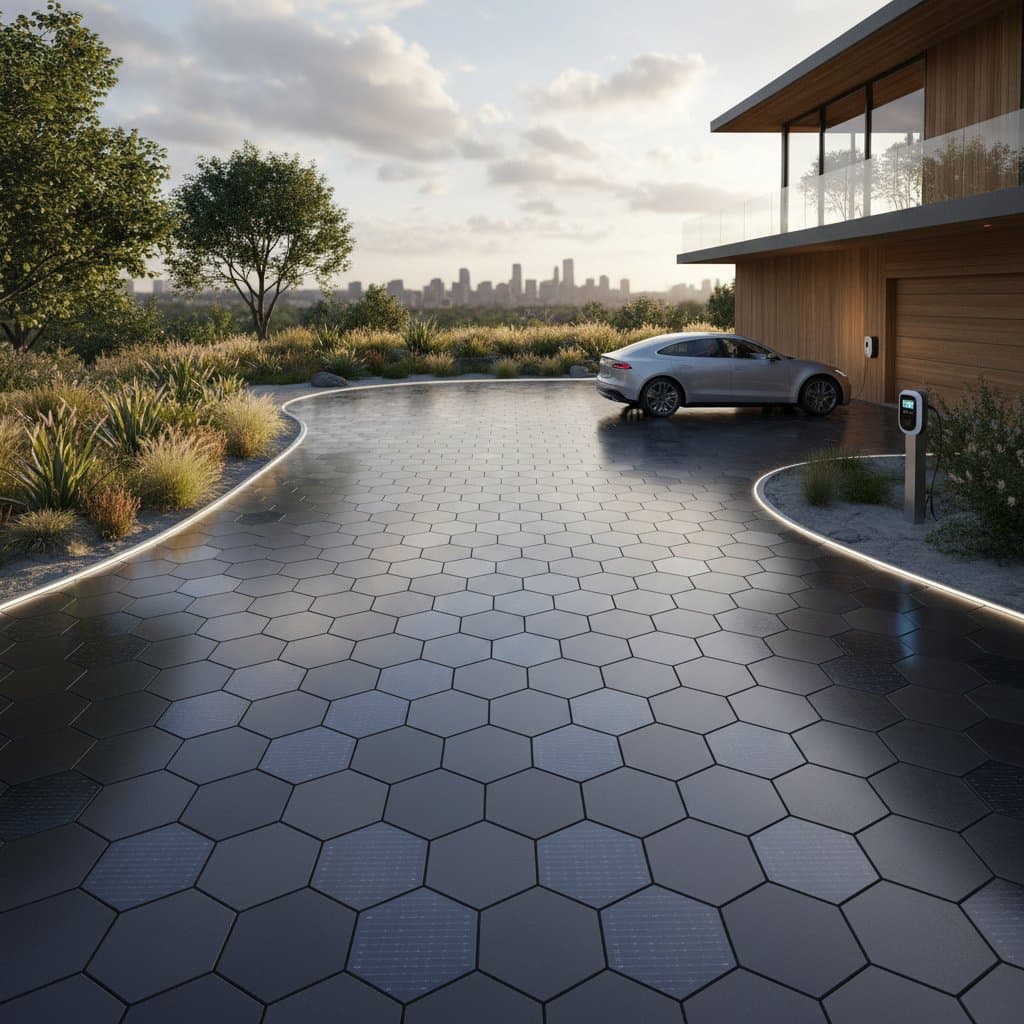
Transform Your Driveway into a Solar Energy Source
Solar driveways integrate photovoltaic technology into durable paving materials. These installations replace traditional concrete or asphalt with solar pavers or panels engineered to support vehicle weights while harvesting sunlight. The generated electricity integrates into home systems or the grid, effectively converting an underutilized space into a productive energy asset.
Advantages and Drawbacks
Advantages
- Generates renewable energy from a surface already in use
- Reduces electricity bills through on-site power production
- Enhances property aesthetics with contemporary design elements
- Serves as a viable alternative when roof space limits traditional solar arrays
- Incorporates snow-melting features in select configurations
Drawbacks
- Requires higher initial investment compared to conventional paving
- Faces limited supplier networks and skilled installers in certain regions
- Achieves lower efficiency than optimally angled rooftop systems due to potential shading
- Involves intricate repairs for individual component failures
- Demands precise engineering for drainage and electrical integration
Pricing Breakdown
Solar paver materials range from $20 to $30 per square foot. Full installation, including site preparation and electrical integration, falls between $35 and $55 per square foot. For a standard 400- to 700-square-foot driveway, total expenses span $15,000 to $40,000, influenced by layout complexity and regional factors.
Key cost influencers encompass:
- Photovoltaic efficiency and power output specifications
- Distance required for wiring to inverters or electrical panels
- Extent of subgrade excavation and soil stabilization needs
- Site accessibility for heavy machinery and trenching operations
- Prevailing local wages, permitting processes, and material sourcing
Although pricier than standard driveways, long-term energy savings recoup a portion of the investment.
Durability and Upkeep
Photovoltaic components in solar pavers maintain output for 20 to 25 years, aligning with conventional panel lifespans. The paving surface endures beyond this period with adequate structural support and protective sealants. Conduct annual inspections for surface cracks, secure wiring, and intact protective layers. Perform cleaning with gentle water pressure and neutral soap solutions to eliminate debris without surface damage.
Reapply protective sealants every three to five years based on exposure and traffic levels. Individual module replacements occur without disrupting extensive areas, thanks to modular designs. Address issues promptly to preserve system integrity.
Essential Specifications
Prioritize these attributes during selection:
- Load-bearing capacity: Minimum 8,000 pounds per axle to accommodate residential vehicles
- Surface traction: Compliance with standards for wet-weather safety
- Environmental resilience: Suitability for freeze-thaw cycles and moisture resistance
- Conversion efficiency: Percentage of sunlight transformed into usable electricity
- Safety certifications: Adherence to UL or comparable electrical standards
- Integration compatibility: Matching connectors for existing inverter setups
Procure 5 to 10 percent additional units to account for on-site adjustments and potential damage.
Site Preparation Essentials
Successful solar driveway projects require robust foundational work and streamlined electrical pathways. Address these elements:
- Subgrade stability: Remove unstable soil and install compacted gravel layers
- Foundation thickness: 6 to 8 inches for standard use, increased for heavier loads
- Water management: Incorporate a 1 to 2 percent slope directing runoff from structures
- Wiring infrastructure: Embed conduits linking the driveway to central power systems
- SolarSelect unshaded locations free from overhanging foliage or buildings
Engage utility marking services prior to excavation. Verify compliance with municipal regulations for solar installations and electrical modifications.
Installation Process
System-specific variations exist, but typical procedures include:
- Site marking: Delineate boundaries and desired patterns, verifying drainage gradients.
- Soil removal: Excavate to the specified depth for base materials.
- Subbase layering: Deposit gravel in 2-inch increments, compacting each thoroughly.
- Utility routing: Position conduits for electrical lines before completing compaction.
- Bedding preparation: Level a thin layer of sand or fine aggregate.
- Paver placement: Align units from a fixed edge, ensuring consistent joint spacing.
- Power linking: Connect modules sequentially using sealed, weatherproof junctions.
- Perimeter securing: Add rigid edging to maintain alignment under load.
- Sealing joints: Apply polymeric sand or approved fillers to lock units in place.
- System activation: Integrate wiring with inverters and perform operational tests.
Certified electricians handle all power-related tasks to ensure code adherence.
Design Configurations
Available solar paver styles include:
- Complete coverage: All units feature integrated photovoltaics for maximum output.
- Mixed arrangements: Combine solar and non-solar pavers to balance expenses.
- Border integrations: Position solar elements along perimeters for illumination and modest energy yield.
- Thermal enhancements: Embed heating elements powered by on-site generation for winter maintenance.
Hybrid approaches frequently provide optimal value, blending functionality with visual appeal.
Professional Installation Recommendations
Solar driveways demand specialized skills beyond basic landscaping. Homeowners may manage preliminary excavation, base preparation, and initial layouts if experienced in hardscaping. However, delegate electrical wiring and system commissioning to licensed professionals. Engage experts for projects involving:
- Areas larger than 300 square feet
- Challenging soil compositions or uncertain hydrology
- Supplementary features like integrated heating
- Regulatory approvals for grid connections
Smaller decorative installations with lighting functions suit capable DIY efforts using standard tools.
Troubleshooting Common Issues
Moisture penetration: Arises from compromised seals or faulty junctions; replace units and reinforce joint integrity.
Surface unevenness: Stems from inadequate base compaction; excavate, stabilize substrate, and reinstall affected sections.
Reduced energy yield: Indicates module degradation or connection faults; diagnose with voltage testing to pinpoint failures.
Protective layer fractures: Swap out damaged pavers; restrict heavy traffic on lightweight decorative variants.
Proactive monitoring prevents minor problems from escalating.
Climate-Specific Considerations
In regions with seasonal freezing, prioritize superior drainage and thermal-rated materials to withstand expansion cycles. Arid zones benefit from reflective paver finishes that mitigate heat buildup and sustain efficiency. Saline coastal environments require anti-corrosion hardware and robust enclosures. Sites with persistent partial shade often yield insufficient returns to warrant full implementation.
Viable Alternatives
- Elevated solar arrays on roofs or carports: Offer superior efficiency at reduced costs per kilowatt.
- Low-profile solar path lighting: Provides ambient illumination with minimal structural changes.
- Adjacent solar shades over permeable pavements: Manage rainfall while producing overhead power.
Implement Your Solar Driveway Project
Solar driveways merge practical utility with forward-thinking energy solutions. They elevate everyday infrastructure into a contributor to sustainability and savings. Develop a detailed blueprint, secure thorough site assessment, and select reputable contractors. Weigh complete versus partial designs against your financial parameters and energy objectives. Review output projections and guarantee provisions to inform your decision.