
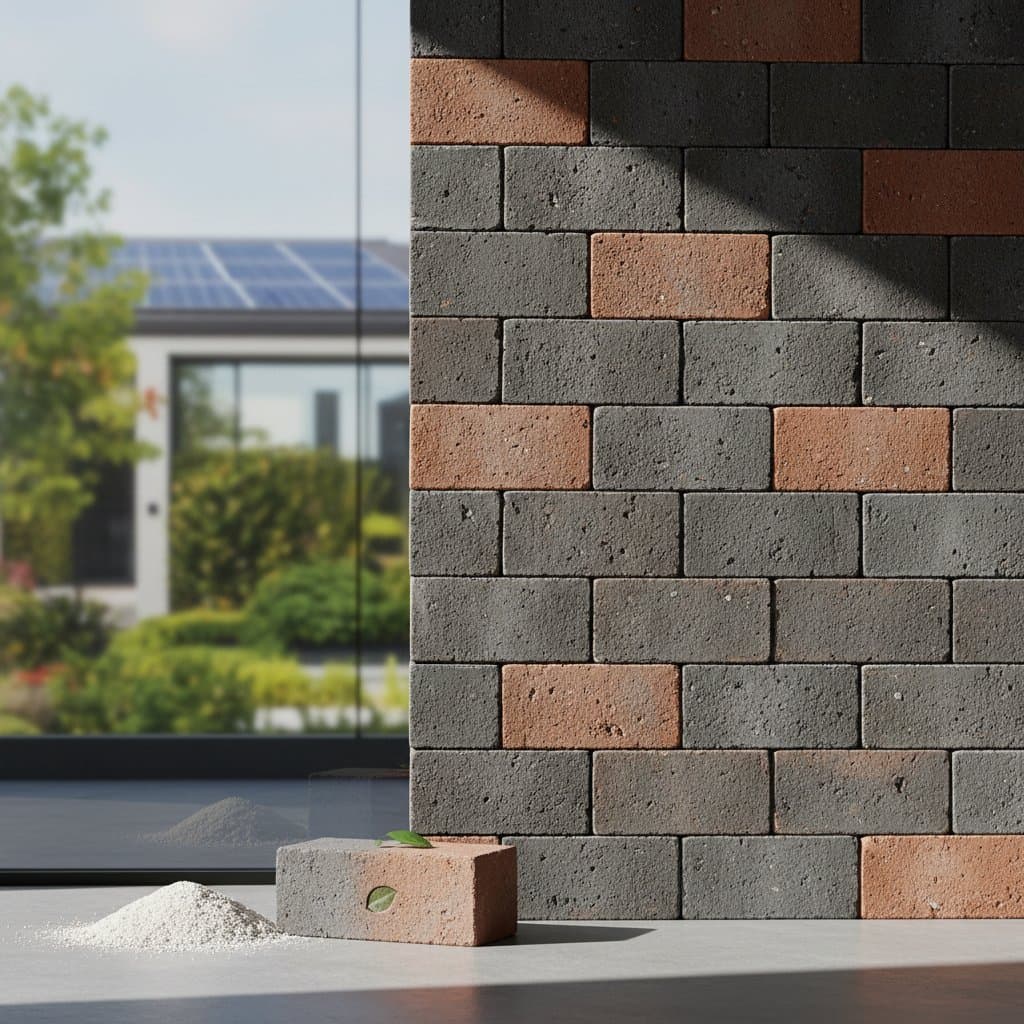
Understanding Geopolymer Bricks
Geopolymer bricks serve as a strong alternative to traditional clay masonry. They deliver strength, durability, and sustainability in a single product. These bricks use industrial byproducts such as fly ash or slag instead of Portland cement. Alkaline solutions activate these materials to form a binder with a structure similar to natural stone.
Traditional clay bricks need high-temperature firing. This process uses significant fuel and releases carbon dioxide. Geopolymer bricks cure at room temperature. They eliminate firing and cut emissions substantially. This approach supports sustainable construction in areas that value both durability and environmental care.
Composition and Performance Factors
The molecular structure determines how well a geopolymer brick performs. Curing creates an aluminosilicate network. This network forms a dense matrix that resists cracking and weathering. It delivers high compressive strength, low porosity, and chemical stability. Clay bricks depend on firing quality and soil composition. These factors often cause variations in strength and appearance.
Strength and Durability Comparison
Geopolymer bricks typically show compressive strengths higher than those of fired clay bricks. Their dense structure limits moisture absorption. This prevents efflorescence and frost damage. They stay stable at high temperatures and resist attacks from salts and acids. Clay bricks are more porous. They can deteriorate more quickly in harsh conditions. Geopolymer bricks offer a better option for load-bearing walls, retaining structures, and pavements.
Planning a Masonry Project
Evaluate site conditions, material sources, and tools before starting. The process follows standard bricklaying with differences in curing and handling.
Site Assessment
Check soil stability and drainage. Proper drainage stops moisture buildup that affects mortar curing. Assess slope and terrain. Determine whether grading or a compacted gravel base is necessary. Contact local utilities before any digging.
Layout and Measurement
Plan wall dimensions with care. Measure length, height, and thickness. Calculate the number of bricks needed. Add a 10 percent allowance for cuts and waste. Keep joint widths consistent, usually around half an inch, to ensure strong bonds and clean lines.
Material Options
Fly ash-based geopolymer bricks
- High strength and good thermal resistance with a lower carbon footprint
- Requires careful handling of alkaline activators
- Suitable for users with intermediate skills
- Ideal for structural walls and exterior facades
Slag-based geopolymer bricks
- Excellent chemical resistance and a dense finish
- Slightly heavier with a need for precise mixing
- Best for intermediate to advanced skill levels
- Works well in coastal or industrial settings
Clay-fired bricks
- Widely available with familiar aesthetics
- Production uses substantial energy and quality can vary
- Appropriate for beginners
- Suited to decorative or non-structural uses
Tools and Materials
Hand tools include a trowel, level, plumb line, brick hammer, chisel, measuring tape, and chalk line. Power tools consist of a mortar mixer, wet saw, and drill with paddle attachment. Rental equipment covers a plate compactor and scaffolding. Materials needed are geopolymer bricks with a 10 percent overage, geopolymer mortar, clean sand, water, and reinforcement mesh if required.
Building Process
- Prepare the foundation by compacting the base and confirming it is level. A stable base avoids settlement cracks.
- Lay the first course using a string line. Spread mortar evenly and verify level and plumb for each brick.
- Build additional courses. Stagger joints by half a brick to increase strength. Keep joint thickness uniform.
- Check alignment often. Verify straightness every few rows and adjust as needed.
- Allow proper curing. Maintain moisture on surfaces for the first few days to reach full strength.
- Clean joints by removing excess mortar before it hardens.
Verify each course for straightness, level, and even joints. Early misalignment worsens with added height. Purchase about 10 percent extra bricks to cover breakage and waste.
Finishing and Upkeep
Surface Protection
Apply a breathable sealer on walls exposed to heavy rain or salt. This finish protects the surface and enhances color while preserving texture. Add lighting or planters to outdoor walls for visual interest.
Ongoing Care
Inspect walls once a year for cracks or loose mortar. Repair joints quickly to block water entry. Clean surfaces with mild detergent and a soft brush. Skip acidic cleaners that may damage the binder.
Errors to Prevent
- Failing to compact the base, which causes uneven settling
- Selecting incompatible mortar that does not bond well
- Shortening the curing period, which lowers final strength
- Overlooking alignment checks between courses
Professional Assistance
Consult a structural engineer or licensed mason for projects that involve structural loads, retaining walls, or connections to existing foundations. Precise control of mix ratios and curing conditions yields the best results with geopolymer systems.