
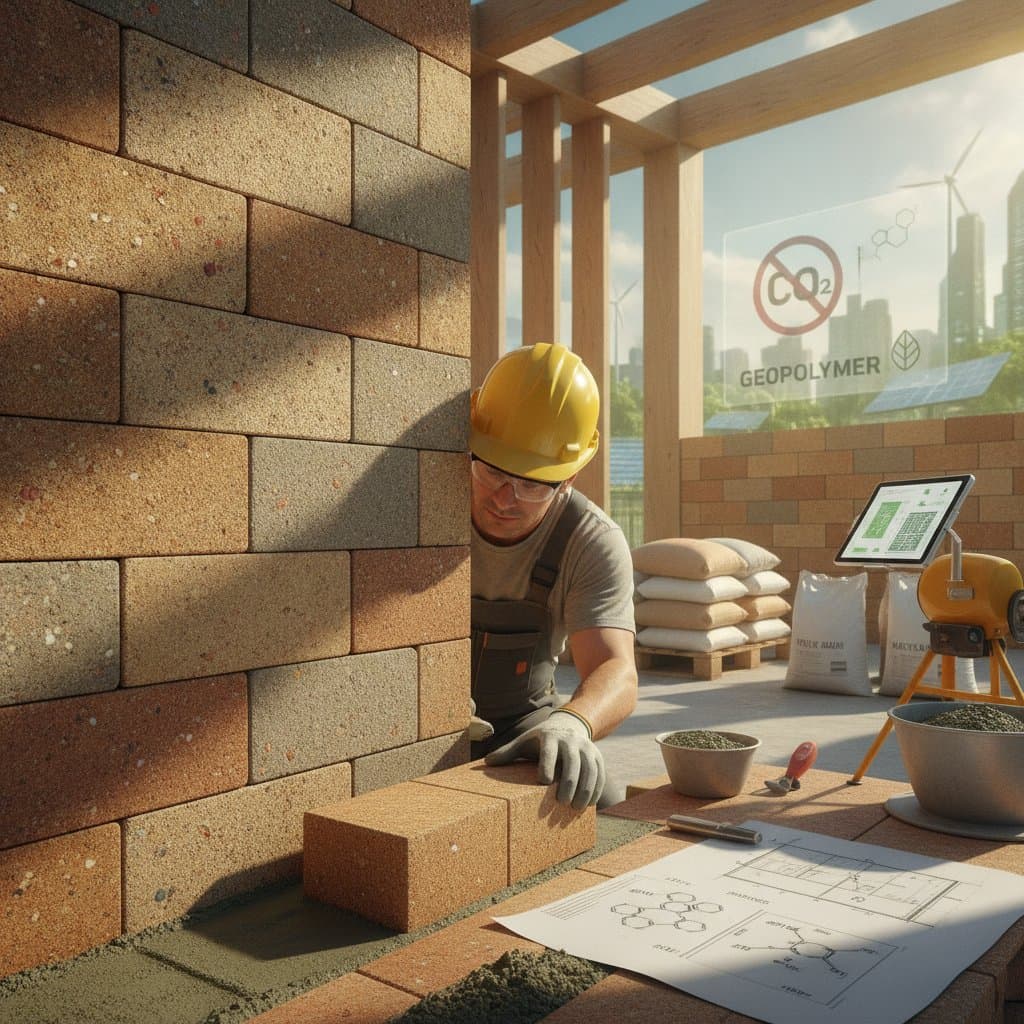
Understanding Geopolymer Bricks
Geopolymer bricks provide a strong alternative to traditional clay or cement blocks. They combine industrial by products such as fly ash or slag with alkaline activators to create a durable binder. This reaction forms a solid material that matches concrete in strength while using far less energy.
Cement production generates substantial carbon dioxide through limestone calcination. Geopolymer technology avoids this step by relying on aluminosilicate chemistry. The approach reuses waste materials and lowers overall energy demand, which supports low impact construction for builders and homeowners.
The Science Behind the Technology
Traditional cement hardens through hydration. Geopolymers gain strength through polymerization of silica and alumina compounds. The resulting matrix resists heat, chemicals, and moisture effectively. Reduced dependence on virgin resources and lower embodied energy position these bricks as a practical sustainable masonry choice.
Skill Requirements and Practical Limits
Working with geopolymer bricks suits intermediate to advanced skill levels. The process follows standard masonry techniques yet requires precise control of curing conditions and mix ratios. Alkaline activators demand protective equipment and secure storage. Large structural projects benefit from a professional mason experienced with these systems. Smaller landscape walls, planters, or garden features remain suitable for capable do it yourself efforts.
Planning the Project
Site conditions and curing environments influence results because geopolymer materials respond differently from cement. Evaluate soil drainage, slope, sun exposure, and material access before starting. Measure wall dimensions, calculate brick quantities with a ten percent allowance for waste, and mark the layout with stakes and string.
Avoid mixing or laying in extreme temperatures. Moderate ambient conditions support consistent reactions. Prepare rinse water and neutralizing agents in advance to handle spills promptly.
Selecting Materials
Fly Ash Based Bricks
These units use fly ash from coal combustion. They deliver high strength, uniform color, and good thermal resistance at moderate cost. Reliable supply of quality ash is essential, and precise mixing improves outcomes.
Slag Based Bricks
Granulated blast furnace slag forms the base. The bricks offer superior chemical resistance and longevity. They weigh more and set more slowly, yet remain economical for exterior or load bearing applications.
Metakaolin Based Bricks
Calcined clay serves as the aluminosilicate source. These bricks provide bright color and fine texture suited to architectural finishes. Higher cost and moisture sensitivity during curing make them best for experienced users.
Tools and Supplies
Hand tools include a brick trowel, level, plumb bob, jointing tool, and rubber mallet. Power tools comprise a mortar mixer or drill with paddle, masonry saw, and optional power washer. Rental items such as a plate compactor, scaffolding, or curing enclosure support larger work. The material list covers geopolymer bricks, mortar mix, alkaline activator solution, clean water, and gravel for the foundation.
Construction Steps
- Excavate to six inches, fill with compacted gravel, and verify level.
- Spread a half inch mortar bed and set the first course along the layout line while checking alignment.
- Stagger subsequent courses by half a brick and maintain consistent joint thickness.
- Cut bricks with a masonry saw as needed, wearing eye and hand protection.
- Cover the completed wall with plastic sheeting to retain moisture during curing.
- Tool joints once partially set and remove excess mortar.
Inspect for plumb, level surfaces and uniform color. Hollow sounds indicate poor bonding and require correction.
Finishing and Upkeep
Apply a breathable sealer to improve moisture resistance. Install caps or coping stones on horizontal surfaces. Integrate lighting or planters for landscaping projects. Regular inspection of joints and prompt cleaning preserve appearance and performance.
Achieving Lasting Results
Proper mix control, curing discipline, and protective measures produce masonry that meets structural needs while cutting environmental impact. These practices deliver durable walls that support sustainable building goals over time.