
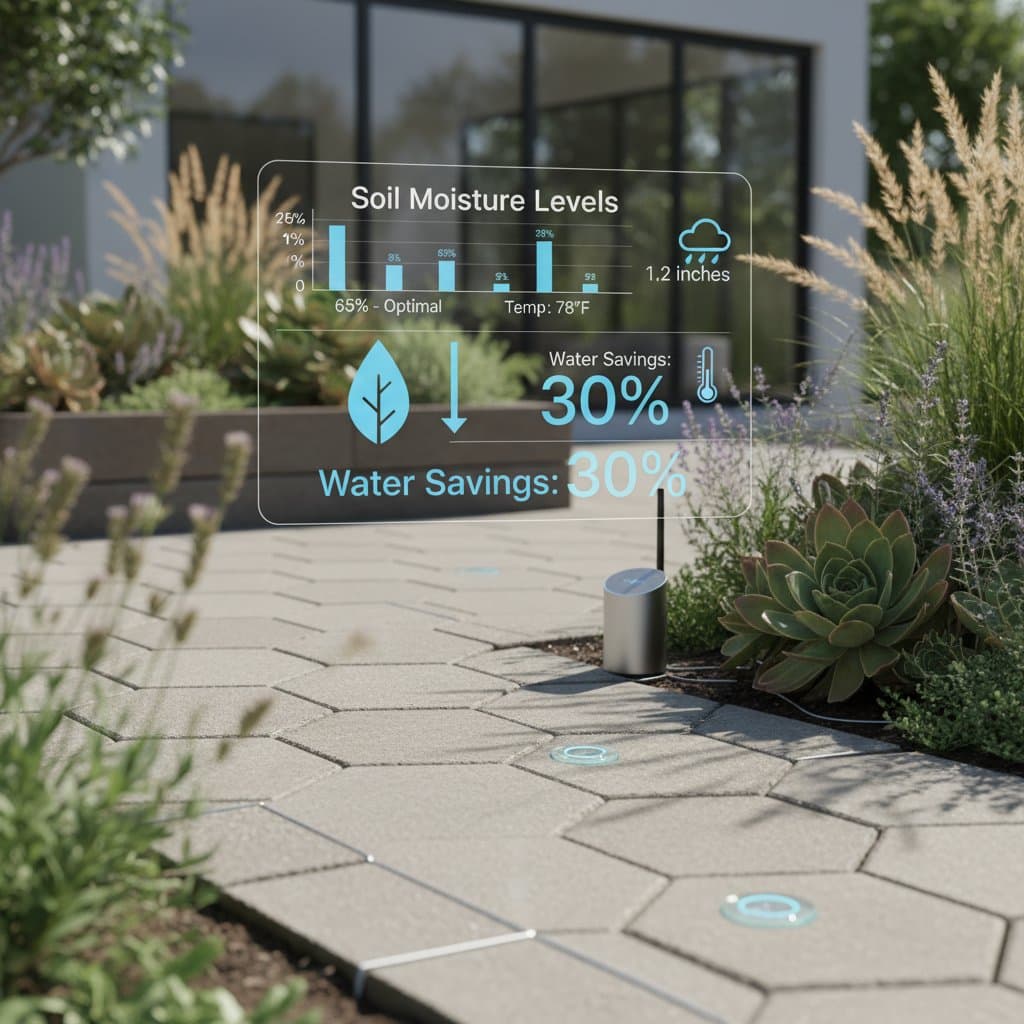
Understanding Smart Paver Technology for Garden Water Management
Smart pavers resemble conventional paving stones yet embed advanced sensors to gauge soil moisture levels, rainfall accumulation, and surface temperatures. These sensors transmit data wirelessly to a central hub or mobile application, revealing precise patterns in plant water consumption. Homeowners gain visibility into irrigation inefficiencies, such as overwatering in shaded zones or under-watering in sun-exposed areas, allowing targeted adjustments.
This integration merges aesthetic landscaping with practical technology. Rather than relying on visual cues or fixed schedules for watering, users access empirical data to inform routines. The outcome includes vibrant gardens that thrive on reduced water volumes, aligning with sustainability goals.
Advantages and Drawbacks
Advantages
- Automated monitoring of water usage through embedded sensors provides continuous, hands-free data collection.
- Precise soil condition insights enable reductions in irrigation waste by up to 30 percent in typical residential settings.
- Seamless incorporation into pathways or patios eliminates the need for obtrusive devices, preserving visual harmony.
- Customizable alerts notify users via app when specific plants require hydration, preventing stress or damage.
- Broad compatibility with leading smart irrigation systems simplifies integration into existing setups.
Drawbacks
- Initial investment exceeds that of standard pavers due to technological components.
- Dependence on nearby power sources and reliable Wi-Fi signals can limit placement options.
- Occasional calibration or battery replacements become necessary to sustain accuracy.
- Performance varies with soil composition and compaction levels, potentially requiring site-specific adjustments.
- Advanced features in certain models demand ongoing subscription fees for app functionality.
Investment Considerations
Individual smart paver units range from $20 to $50 per square foot, influenced by sensor sophistication and surface finish options. Full installation, encompassing base preparation, labor, and network configuration, typically spans $30 to $70 per square foot.
Expenses escalate for intricate designs, distant installations, or reinforced materials suited to high-traffic zones. Projects near established Wi-Fi and involving straightforward garden paths or patios generally fall toward the lower spectrum of pricing.
Durability and Upkeep
Paving materials endure 10 to 20 years under normal conditions, while electronic elements last 5 to 10 years with proper care. Seasonal verification of sensor outputs ensures ongoing reliability; remove accumulated debris from joints to avoid interference with moisture detection.
Systems powered by rechargeable batteries or solar panels warrant yearly inspections. Prompt replacement of malfunctioning sensors prevents structural shifts or data inaccuracies in the paved surface.
Key Specifications to Evaluate
Prior to purchase, assess these essential attributes:
- Ingress protection rating to withstand environmental moisture and particulates.
- Wireless transmission range and protocol compatibility with your home automation hub or irrigation controls.
- Temperature tolerance aligned with local weather patterns, from freezing winters to scorching summers.
- Compressive strength ratings to support pedestrian traffic or light vehicular use.
- Power options, including wired connections, solar charging, or battery life, along with ease of maintenance.
Site Preparation Strategies
Approach layout planning similarly to traditional paving projects, ensuring adequate slope for water runoff. Identify sensor positions in representative soil areas, avoiding extremes like perpetually wet or arid spots.
Engage utility location services prior to excavation. Standard installations require a 4- to 6-inch compacted gravel sub-base topped with a sand bedding layer; plan for accessible routing of any necessary wiring.
Step-by-Step Installation Guide
- Outline the project area and designate sensor integration points.
- Excavate to accommodate the full depth of gravel, sand, and paver thickness.
- Layer and compact the gravel base to promote stability and efficient drainage.
- Level the sand bed uniformly across the prepared foundation.
- Position pavers starting from a reference edge, maintaining consistent joint spacing.
- Embed and activate sensor modules at designated locations, linking them to the central hub.
- Secure perimeter restraints to lock the assembly in place.
- Sweep sand into joints, vibrate for settling, and verify overall flatness.
Allow the installation to cure fully, free of moisture and debris, before initializing the sensor network or applying sealants.
Design Choices and Configurations
Available in rectangular, square, or irregular cobblestone profiles, smart pavers support diverse aesthetic preferences. Distribute sensor units at regular intervals across the surface for comprehensive coverage; intersperse with non-sensor pavers to balance functionality and expense.
Opt for lighter hues in intense sunlight to mitigate thermal absorption, or deeper shades in temperate zones to accelerate surface drying after precipitation.
DIY Installation or Professional Assistance
Ambitious homeowners proficient in basic masonry and electrical tasks can manage modest pathways or borders independently. Engage certified landscapers for expansive patios, driveways, or integrations with automated irrigation networks to guarantee precision.
Professionals excel in adapting bases for challenging soils prone to poor drainage or freeze expansion, safeguarding sensors from displacement or failure.
Troubleshooting Typical Issues
Non-responsive data updates often stem from power interruptions or signal disruptions; inspect connections and perform app resets as initial steps. Inconsistent readings frequently result from inadequate base compaction or debris-obstructed joints that retain excess water.
Address faulty units through isolated replacements, minimizing disruption to the surrounding pavement.
Adapting to Local Conditions
Select freeze-thaw resistant pavers and sensors for regions with harsh winters to avert cracking. In saline coastal environments, prioritize corrosion-proof enclosures for longevity.
Arid, high-UV areas benefit from materials with enhanced stability against fading and warping; verify system resilience to anticipated climatic fluctuations.
Simpler Monitoring Alternatives
For those deterred by the complexity or price of smart pavers, standalone in-ground probes or intelligent hose controllers offer essential moisture feedback without altering hardscapes. Yet, for fresh installations, smart pavers deliver unmatched, holistic oversight of both surface and root-zone dynamics.
Realizing Efficient, Data-Driven Gardens
By embedding intelligence into your paved landscapes, smart pavers create a responsive network that illuminates water dynamics in real time. This empowers precise stewardship, yielding lush, resilient gardens that honor environmental responsibility and long-term savings.