
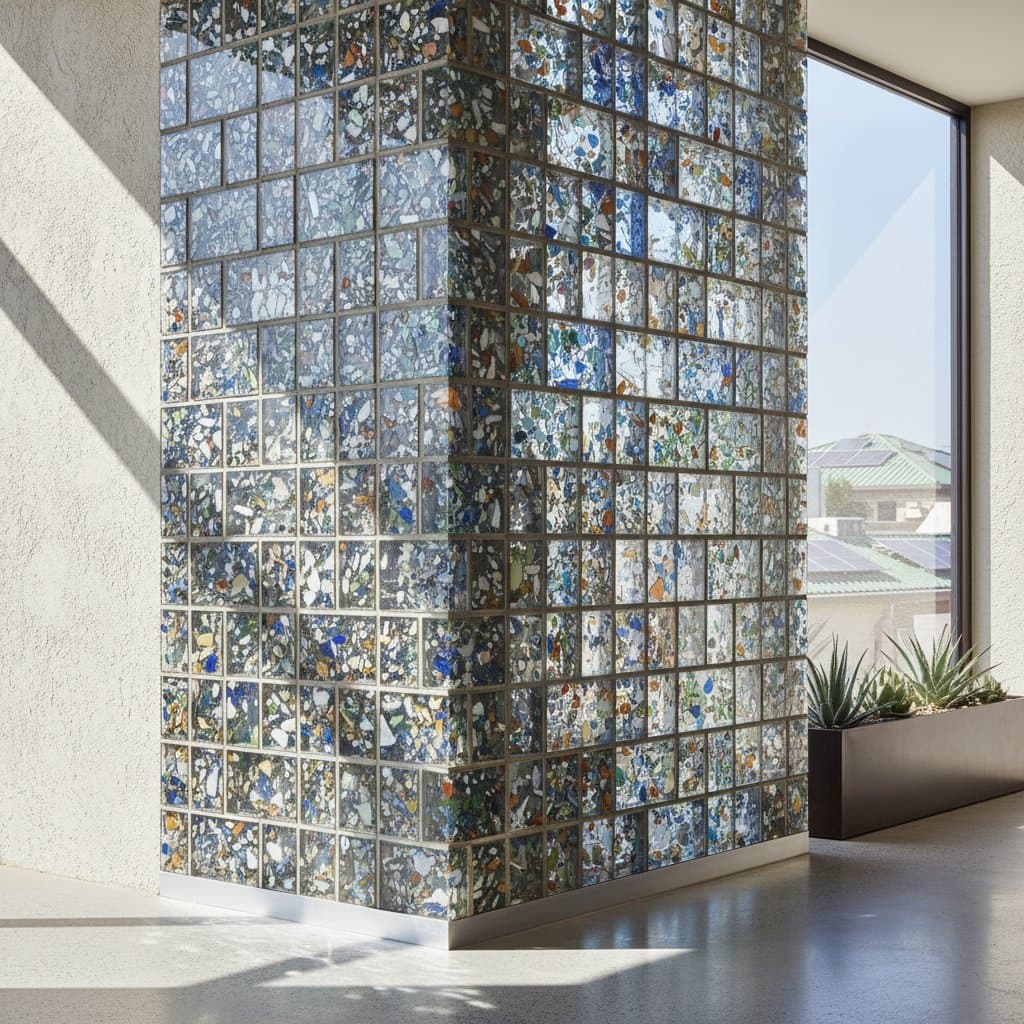
The Rise of Recycled Glass Masonry in 2026 Eco-Luxury Design
Recycled glass masonry incorporates crushed or reclaimed glass that forms blocks, bricks, or terrazzo-style panels. This process transforms waste glass into a robust, ornamental construction material. The appearance varies from transparent clarity to multicolored speckles that capture and refract light in unique ways beyond traditional masonry capabilities.
Advantages and Drawbacks
Advantages
- Derived from post-consumer or industrial glass waste, which decreases landfill contributions
- Reflective qualities provide dimension and brilliance in interior and exterior settings
- Once sealed, it resists stains, mold, and moisture effectively
- Endures over time with little color degradation
- Functions well in structural and ornamental applications
Drawbacks
- Exceeds the weight of standard brick or concrete masonry units, potentially requiring enhanced structural support
- Edges of glass aggregates may fracture during incorrect cutting
- Availability from local suppliers remains limited in certain areas
- Exceeds the expense of typical concrete masonry products
- Demands precise sealing to avoid surface loss of luster
Cost Breakdown
Material expenses for glass masonry units or terrazzo panels fall between 12 and 25 dollars per square foot. Total installed costs generally span 25 to 55 dollars per square foot, influenced by pattern complexity, site accessibility, and finishing standards.
Factors that elevate expenses include custom color formulations or certifications for recycled content, polished or translucent surface treatments, intricate mortar arrangements or integrated backlighting, and delivery to remote locations or work by installers with specialized expertise.
Durability and Upkeep
When installed correctly, recycled glass masonry endures for 50 years or longer. Professionals recommend inspecting joints and sealants every few years to maintain integrity. For cleaning, apply a mild pH-neutral detergent with a soft brush and water rinse.
Steer clear of acidic cleaners, as they etch the surface. Thorough rinsing preserves the reflective properties. In outdoor applications, reseal polished areas every three to five years to sustain shine and ward off mineral buildup.
Key Specifications to Verify
Prior to purchase, evaluate these elements:
- Compressive strength of at least 3,000 pounds per square inch for wall units
- Slip resistance rating appropriate for flooring or exterior pavers
- Freeze-thaw rating compatible with local climate conditions
- Unit thickness, often 2 to 4 inches for wall blocks or 3/4 inch for terrazzo tiles
- Edge finish options such as saw-cut, tumbled, or polished
- Recycled content level, typically ranging from 60 to 95 percent
Project Planning and Preparation
A level, stable substrate proves essential for success. For walls, assess foundation bearing capacity and load distribution paths. In floors or patios, incorporate a minimum slope of 1/8 inch per foot to facilitate drainage.
Steer away from sites with unstable soil or significant frost movement unless base depths compensate adequately. Account for access routes to accommodate heavy pallet shipments, as glass masonry frequently arrives in compact quantities. Verify the absence of underground utilities prior to excavation. Certain jurisdictions mandate permits for structural glass block walls or ornamental facades.
Installation Process
Follow these steps for effective placement:
- Establish the pattern layout and align with string lines for precision.
- Prepare the foundation using compacted gravel or a concrete footing based on project requirements.
- Prepare mortar or adhesive formulated for glass or non-porous materials.
- Position blocks starting from a reference corner, maintaining uniform joint spacing.
- Incorporate reinforcement as required, such as stainless steel or fiberglass grids.
- Finish joints smoothly and remove excess material before it sets.
- Apply sealant after full curing to safeguard color vibrancy and resist stains.
For cutting, employ a wet saw equipped with a diamond blade. Wear protective eyewear and gloves at all times, and use water to suppress dust generation.
Design Patterns and Variations
Favored configurations encompass:
- Linear brick bond patterns for walls and veneers
- Stacked bond arrangements for contemporary facades
- Random terrazzo scatters ideal for countertops or floors
- Backlit panels featuring LED strips positioned behind translucent blocks
Opt for fine aggregate mixtures to achieve understated shimmer or coarse chips for dramatic patterns. Color combinations frequently draw from bottle glass, mirrors, or reclaimed window glass, resulting in distinctive hues for each production run.
DIY Approaches Versus Professional Services
Experienced individuals with masonry background can manage small-scale projects like accent walls, backsplashes, or garden edging. Essential tools include a wet saw, rubber mallet, level, and protective equipment.
Engage certified professionals for load-bearing walls, heavy-duty floors, or extensive terrazzo surfaces. Experts guarantee optimal joint reinforcement, substrate compaction, and sealant adhesion.
Addressing Typical Issues
Surface haze or dulling: This issue often stems from unsuitable cleaning methods. Resolve by applying neutral detergent with a soft cloth.
Cracked joints: Movement or inadequate curing may cause this. Repair by repointing with flexible mortar in affected areas.
Edge chipping: Dry cutting or impacts typically lead to damage. Smooth imperfections using a fine diamond pad followed by resealing.
Efflorescence: Moisture-trapped salts produce white deposits. Brush away when dry, improve drainage, and reseal as needed.
Considerations for Regions and Climates
In areas prone to freeze-thaw cycles, select units rated for exterior use and utilize breathable sealers. For hot, sun-exposed environments, choose UV-resistant pigments to minimize fading.
Coastal settings require corrosion-proof reinforcement and sealers tolerant of salt exposure. Regions with expansive clay soils benefit from deeper bases and unobstructed drainage routes throughout the year.
Viable Alternatives
Should recycled glass masonry present challenges in weight or budget, explore these options:
- Porcelain terrazzo tiles, which offer reduced weight and straightforward indoor installation
- Polished concrete embedded with glass chips, delivering comparable aesthetics at diminished expense
- Recycled clay bricks, providing timeless texture with decreased environmental impact
- Glass-infused panels as lightweight veneers for non-structural decorative elements
These choices often sacrifice some luminosity or transparency in exchange for affordability or ease of use.
Integrating Recycled Glass Masonry into Your Build
Recycled glass masonry unites aesthetic innovation with ecological benefits by repurposing waste into enduring architectural features. Homeowners pursuing sustainable elegance gain a material that aligns ethics with visual impact.
Align project scope with available expertise, source local materials, and validate substrate and drainage preparations upfront. From modest accent features to expansive terraces, adherence to foundational principles ensures enduring performance: a solid base, precise joints, and effective sealing yield surfaces that illuminate, persist, and divert waste from disposal sites.